
Exhibitions
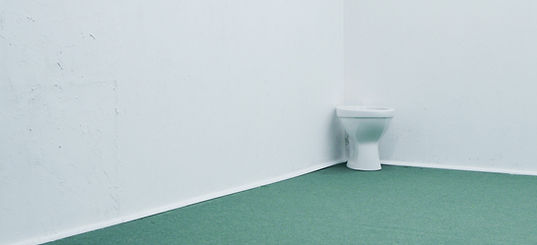
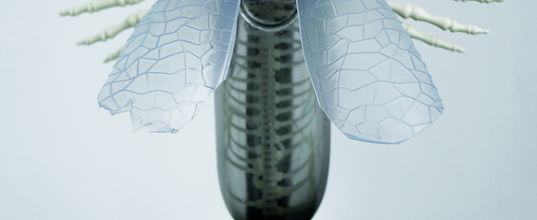
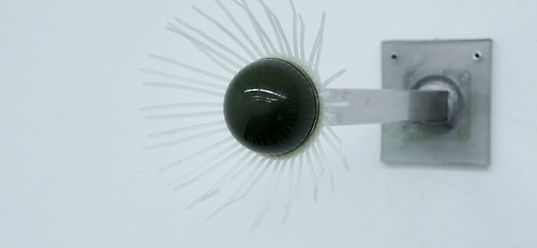
Reactivating the acronym P.D.A. (Public Displays of Affection) through a conceptual displacement, Agrotes detaches the term from its conventional association with intimacy and reframes it as a mechanism of public legibility and affective regulation. Within this logic, intimacy no longer appears as a spontaneous or private event, but as a codified and performative modality subjected to visibility, procedural control, and behavioural formatting. The exhibition thus addresses the extent to which subjectivity is constituted through its submission to systems that convert presence into data, emotion into readable output, and relation into measurable performance. Drawing from the visual and affective residues of post-internet culture, post-irony, and Y2K futurity, Agrotes constructs an environment in which technological promise has given way to infrastructural dependence. What once signified progress or liberation now reappears as a totalizing condition that organises experience in advance. Through the simulation of a corporate setting, the exhibition displaces the viewer from the position of detached spectator and situates them instead within an operational field structured by behavioural rules, repetitive procedures, and subtle forms of control. Entry itself becomes part of the work: queuing, responding, complying. The exhibition unfolds not as a static display but as a managed situation in which the visitor is gradually absorbed into an administered environment. At the centre of the installation lies a tension between collapse and continuity. The space evokes a condition of generalized deterioration, yet one that remains fully functional, as though breakdown itself had become the ordinary substrate of everyday life. In this sense, P.D.A. does not stage catastrophe as rupture, but as an ongoing state through which contemporary labouring existence persists. The atmosphere oscillates between comfort and erosion, simulation and reality, generating a perceptual instability in which the subject is compelled to adapt even while becoming conscious of the system’s violence. The artworks within the space reinforce this condition of suspended autonomy. A kinetic sculpture and a screen operate independently, while hybrid objects preserve the form of tools despite no longer requiring human use in any conventional sense. Here, the human figure emerges as increasingly superfluous within an environment that continues to function without it. The logic of the glitch becomes crucial: not merely as a stylistic citation, but as an ontological breach within the system, a moment in which repetition, malfunction, and temporal suspension expose the artificiality of the structure itself. Fluid and unstable materials intensify this effect, occupying an ambiguous threshold between attraction and repulsion, containment and dissemination. Agrotes’ exhibition ultimately articulates a philosophical reflection on life under conditions in which technological systems no longer simply mediate experience but actively precondition it. P.D.A. stages a world in which the boundaries between body and infrastructure, intimacy and performance, subject and apparatus become increasingly indeterminate, revealing contemporary existence as a field of continuous adjustment to forms of power that appear seamless precisely because they have become environmental.
Curator: Gia Mchelen
Venue: The Eye Altering
Exhibition Dates: 24.04.26 – 28.05.26
Text Author: @marianna_panay
Technical support fabricated by: @deodorant.coo
Photography Credits: @irenesoukou


Relaxation is difficult to pin down. Even in those rare moments when we believe ourselves to have experienced it, it remains merely fleeting. At those times when we sense ourselves relaxing briefly amid profound tension, there is a different layer of tension that pervades. The relaxation that once seemed granted to us as naturally as breathing now feels strange and unfamiliar. No longer something that visits us on its own, it is a state that can just barely be achieved through conscious training and repeated practice—drifting off toward a horizon of complete unattainability.
Today’s massage industry bills that receded sensation as a product available for immediate consumption. Expensive massage chairs and various other massage devices confidently promise us relaxation, but even that pledge remains trapped in a cyclical equation of “tension > resolution > returning.” The underlying assumption is that there is a predetermined “original” state that we should return to, where relaxation operates not as liberation but as a returning mechanism. The origin in question is a body capable of working, and “relaxation” is standardized amid the demands of the capitalist timetable and productivity.
The exhibition Massage Platz aspires to the deconstruction of this narrow pathway. The “Platz” is a place where the individual can briefly set themselves down, as well as a provisional place for people to gather and scatter without purpose. Stripped of function and goals, this empty space harbors a sense of indeterminacy and pure potential, seeking a way of sliding outside the familiar order and stripping away the surfaces of schematized relaxation.
Rather than sidestepping the layers of tension and oppression that inhibit relaxation, Yorgos Agrotes confronts them directly. He looks at discomfort and pain not as things to be removed but as signs whose weight the living being is obliged to shoulder. His canvases are psychological landscapes formed through the layers left behind by the clashing of emotions, memories, and materials. Rejecting an immediate resolution of the tension here, he lingers instead in an indeterminate moment where choice, regret, bitterness, hesitation, and irony all intersect. This represents an act of observing the possibilities for change that are in the loose spaces formed by disorder. As Agrotes searches through the unfamiliar world pervading those spaces, he seeks out the new sense of relaxation that only emerges on the structure’s edges.
Sojung Park encounters a sense of release within the flows that materials themselves unfold. She hangs her materials and then spends a long time observing the process as they flow, twist, and swell, perceiving the alternation between balance and imbalance. Materiality manifests here not through simple objects but through unpredictable events that unfold across time and space. In her encounters with these materials, she yields the place of the subject and summons inner memories and images based on sensory strata that cannot be captured in language. In this exhibition, she appropriates systems that generate pressure and flow—massage devices and circulation mechanisms—decontextualizing them into media through which materials release their own rhythms. Through this shift, she explores relaxation as a process unfolding through ongoing relations and continual change.
Agrotes and Park share similarities in that they do not strip away tension or instability but instead trace the trembling and flows that emerge through them. One of them explores the signs of relaxation that appear with trembling under the weight of pressure; the other welcomes relaxation as an event as she yields herself to matter’s indeterminate flows.Their work rejects restoration to a better functional existence, as it inquires into the meaning of life that only arises amid tension and transformation. This shakes our trust in fixed forms and defined subjects, revealing the conditions of a world that is constantly forming and disappearing.
As a result, relaxation is no longer simply a moment of rest or recovery. As familiar orders are upended, fixed boundaries are loosened, and unfamiliar rhythms permeate us, we find ourselves at the threshold to a different way of being. What Massage Platz ultimately seeks to show is not a moment of relaxation but relaxation as a liberating and transformative experience. These are the foundations for a new life that blossoms amid indeterminacy—the possibility of encountering the truest self while straying the farthest.'
text & cutrated by Haram Kang
ranslation by Colin Mouat
space design by Shampoo
leaflet design by Eunji Lee
technical support by 채종혁
photography by Joseph Lee
supported by Art Council Korea (ARKO)


"Off-Site" d͡zamaˈɾia
Off-Site: Yorgos Agrotes denotes a situation outside the central, established and expected parameters. It signifies a departure from recognized spaces and entering more unstable, marginal or transitional situations. An installation that reconstructs an environment in which the familiar foundations of reality are deconstructed, thus prompting reflection on the inherent instability of existence. This exhibition goes beyond a mere intellectual exercise by activating a commentary on contemporary society, of a world in a state of liminality, caught between the decadence of the old and the daunting challenge of creating the new. When the fundamental structures of our understanding disintegrate, this situation transcends philosophical debate and becomes a pressing political reality. The act of maintaining outdated systems and cultivating nostalgia for institutions that can no longer support modern demands is not a neutral stance; it constitutes an active resistance to change. Rather than revealing new truths, it comments on the illusions that influence interpretations of society, power, and the future. Those entrenched narratives that perpetuate inequalities, generate fear, and promote political stagnation do not collapse on their own. Their dismantling does not ensure change unless there is a deliberate and conscious movement away from preservation. If the present is indeed fluid and uncertainty prevails, is any claim of neutrality inherently complicit?


.jpg)
_JPG.jpg)

“Stairway To Nothing” The Eye Altering
“Stairway to nothing”, Yorgos Agrotes first solo exhibition hosted at the gallery. The Cypriot artist introduces us to his blurry, frantic universe of personal records, a visual diary that constitutes his artistic research. The exhibition is cluttered with pictorial notes of his mundane experiences kept on paper using oil colours, and modifying or creating three-dimensional pieces at times. Objects, animals, gaps, and phrases that comprise metaphors of an unfulfilling ordinary life, fragments of his experiences translated into colours and organized in a random way that bucks traditional painting composition.


